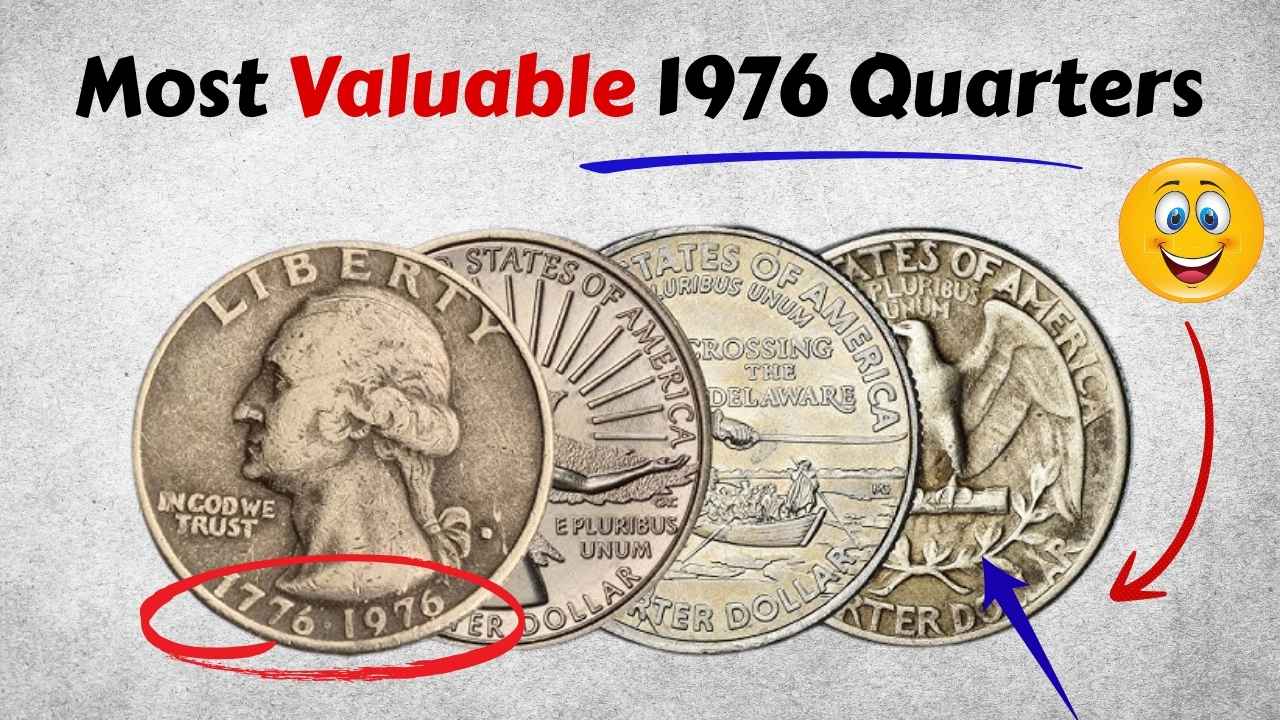
1976 Bicentennial Quarters: The 1976 Bicentennial quarter is one of the most recognizable coins in the United States. With its special design celebrating 200 years of American independence, many people remember seeing these quarters in everyday change. Because so many were made, most Bicentennial quarters are still worth face value. However, a small number are far more valuable than people realize. Some rare examples found in circulation can be worth hundreds or even thousands of dollars, making them exciting discoveries for collectors and casual coin hunters alike.
Why the 1976 Bicentennial Quarter Is Special
The Bicentennial quarter was issued to celebrate the 200th anniversary of the United States. Instead of the usual eagle on the back, the coin features a colonial drummer along with a torch and thirteen stars. The front still shows George Washington, but the date is different from regular quarters. Instead of a single year, it shows 1776–1976, marking the nation’s founding and its bicentennial celebration.
These quarters were minted in very large numbers, which is why they are still common today. Even so, certain versions stand out because of special features, minting errors, or metal composition. These are the coins that collectors actively search for in circulation.
Valuable Bicentennial Quarter One: 1976 Silver Proof Quarter
One of the most valuable Bicentennial quarters is the silver proof version. While most Bicentennial quarters were made from a copper and nickel blend, some were struck in 40 percent silver. These silver quarters were mainly sold to collectors, but a few have made their way into circulation over the years.
A silver Bicentennial quarter has a brighter, more solid silver appearance and weighs slightly more than a regular quarter. When found in excellent condition, especially if it still has sharp details and a clean surface, this coin can be worth a significant amount. Collectors value it because it combines a special design with precious metal content.
Valuable Bicentennial Quarter Two: Doubled Die Error Quarter
Another highly valuable Bicentennial quarter is one with a doubled die error. This type of error happens when the coin design is impressed onto the metal more than once in a slightly misaligned way. The result is doubling that can often be seen in the lettering or numbers.

On Bicentennial quarters, doubling may appear on the date, the word liberty, or parts of the drummer design. These errors are rare and often go unnoticed by people who are not familiar with coin collecting. A clear and well-defined doubled die Bicentennial quarter can be worth a surprising amount of money, especially if it is in strong condition.
Valuable Bicentennial Quarter Three: Off-Center Strike
An off-center strike is one of the easiest errors to spot and one of the most interesting to collectors. This error occurs when the coin blank is not properly aligned during the striking process. As a result, part of the design may be missing or pushed to one side.
Off-center Bicentennial quarters found in circulation are rare but possible. The more dramatic the misalignment, the more valuable the coin tends to be. Collectors look for coins where a large portion of the design is off-center but still clearly visible, as this shows the error without damaging the coin.
Valuable Bicentennial Quarter Four: Missing Clad Layer Error
Some Bicentennial quarters were struck with a missing outer layer, known as a missing clad layer error. These quarters appear darker or copper-colored on one side and feel lighter than normal. This happens when the copper-nickel layer does not properly bond to the core during production.
Missing clad layer errors are highly collectible because they are unusual and visually distinct. When such a quarter is found in circulation and confirmed to be genuine, it can be worth hundreds or even thousands of dollars, depending on its condition.
How These Rare Quarters End Up in Circulation
Many people wonder how valuable coins like these end up in circulation. Over time, coins from collections, estate sales, or forgotten savings are often spent without being checked. This allows rare coins to mix in with regular change.
Because Bicentennial quarters are so common, people rarely stop to examine them closely. This increases the chances that valuable examples can pass through many hands before being noticed.
How to Check Your Bicentennial Quarters
If you want to search for valuable Bicentennial quarters, start by checking the weight and color. Silver quarters will look different and weigh more than regular ones. Use a magnifying glass to inspect the date and lettering for signs of doubling.
Also look carefully at the overall design placement. If the image looks off-center or incomplete, it could be an error coin. Pay attention to the edges as well, as missing layers can sometimes be spotted there.
Avoiding Common Mistakes
One of the biggest mistakes people make is cleaning their coins. Cleaning can scratch the surface and lower the value. It is always best to leave coins in their original condition.
Another mistake is assuming every Bicentennial quarter is valuable. Only specific versions with rare features or errors are worth significant money.
Why Collectors Still Love Bicentennial Quarters
Bicentennial quarters remain popular because they represent a unique moment in American history. Their special design sets them apart from regular quarters, and their continued presence in circulation makes them fun to collect.
Collectors enjoy the challenge of finding rare varieties among common coins. This keeps interest in Bicentennial quarters strong even decades after their release.
Conclusion
The 1976 Bicentennial quarter may look ordinary at first glance, but some versions are far from common. Silver proof quarters, doubled die errors, off-center strikes, and missing clad layer errors are among the most valuable examples that can still be found in circulation. While these coins are rare, they do exist, and checking your change could lead to an exciting discovery. With patience and careful observation, an everyday quarter could turn out to be a valuable piece of American history.